Tag Archives: Culture

HOW TO GIVE FIRST AID?

Anyone may find oneself in a difficult situation, which might have to do with a relative passing out, different medicine reactions, or uncontrollable bleeding. Only a very few people know how to react to these situations, which except from being not pleasurable at all, seriously jeopardize the life of our relatives, friends, etc. In these cases, it is essential for some quick medical aid to be provided as soon as possible.

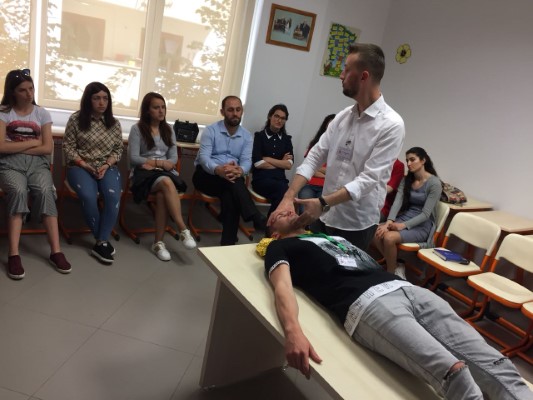
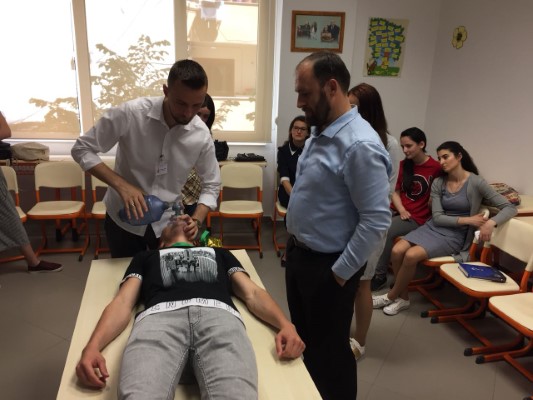
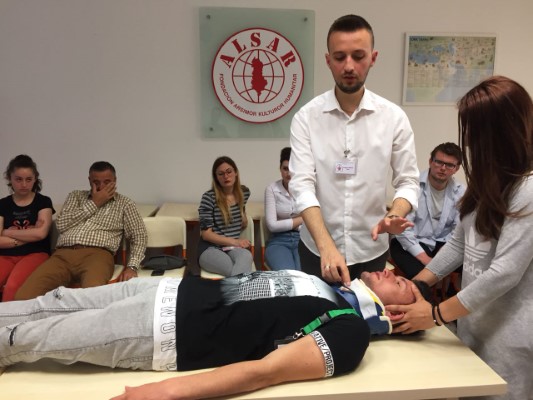
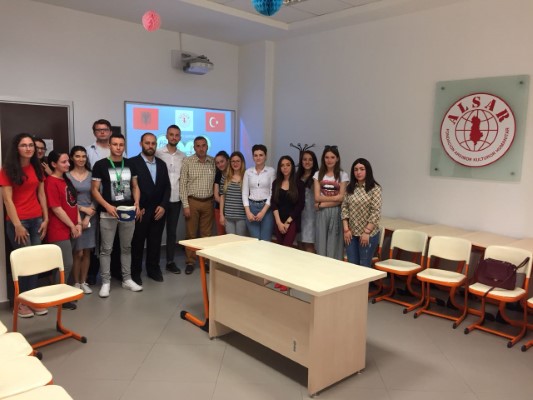
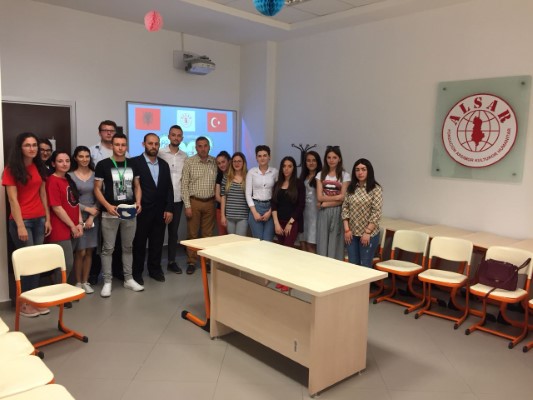
In this context, in the ALSAR Foundation conference room, the Medicine Department students, who are excellence scholarship beneficiaries, conducted a training activity regarding the importance of giving first aid in any circumstance and situation required and community awareness raising in this regard.

During their presentation on the topic “How and when to give first aid”, they made illustrations through techniques and concrete examples for the people present. They shed light upon the first aid regarding how to give it to the sick or the wounded person on a scene, on transport means and in the respective health institution. Through this aid, the direct avoidance of dangerous causes, that worsen the sick or wounded person’s health condition, is aimed.

The “saver” in this case must keep in mind and follow the basic principles of giving first aid and consider it as a human and legal obligation towards all those who in a certain situation have their lives in danger.

In all these cases, the saver, who gives the first aid, must be calm, moderate, conscious and the main thing is that he/she must have quality overall knowledge.

In conclusion, the participating students evaluated the activity, stating that every one of them might be a lifesaver, feeling more confident in themselves for the way of giving first aid.

STUDENTS ON AN AWESOME TRIP

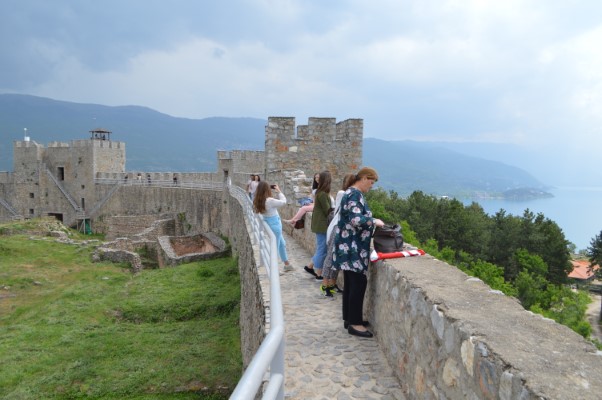
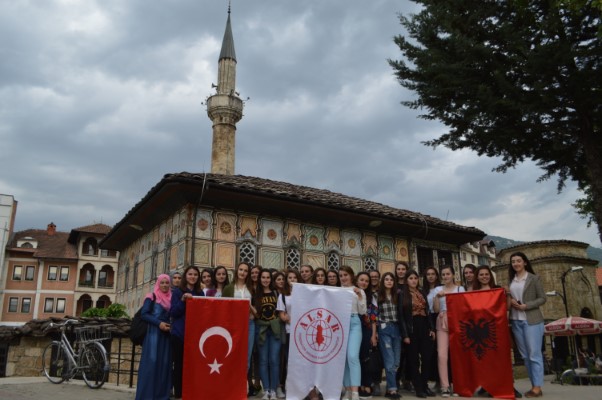
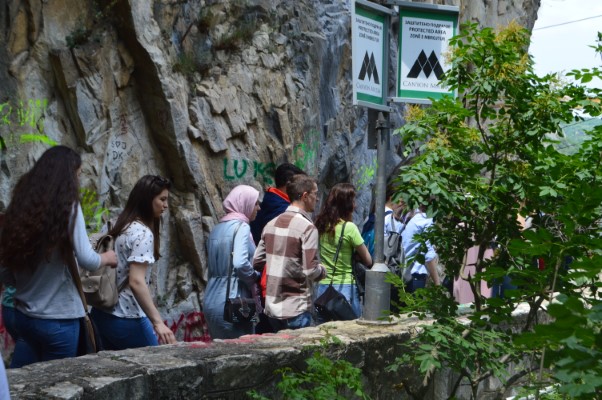
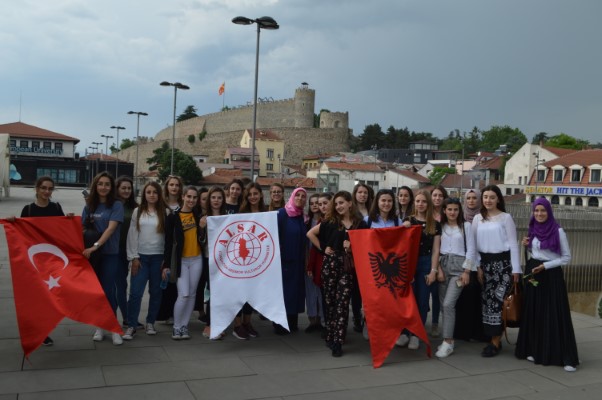
Under the motto “Let’s get to know the cultural and historical heritage of Albanian territories” during 4-6 May, the “ALSAR” Foundation organized a trip to the city of Ohrid, Skopje and Prizren for students staying in dormitories. The first stop was in the city of Ohrid, which is known as the city of flowers and greenery, with its wonderful lake landscape. The visit continued in the region of Skopje, which is one of the most important cultural and economic centres of Macedonia, an impressive moment was also the visit at the Mustafa Pasha Mosque, a monument of cultural heritage. In the upcoming days, the beautiful city of Prizren in Kosovo was visited. Such cultural activity was participated by students knowing the values of culture, tradition, and history of our territories, as part of our cultural and national heritage values mosaic, aiming at the transmission of values of education and feelings of pride for our country.

THE SCIENTIFIC SYMPOSIUM: “FRATERNAL AND STRATEGIC ALBANIAN-TURKISH RELATIONS”

Nowadays, the relations between Albania and Turkey hold a special place in the public discourse. It even can be said that this topic is amongst the most heated ones, which is constantly arising great interest. Analytical papers and extended television shows are also active in this topic.  While reading or watching them, one may note unbiased analyses, realistic perspectives, yet there is strong opposition towards the current relations between the two countries, stemming from stereotypes, and shallow knowledge, complete ignorance, and from clearly and deeply anti-Turkish and anti-Islamic sentiments.

The heated debate on these relations arises from first the expanding regional and global role of Turkey, in pursuit of an independent standpoint, which makes this country being portrayed in every moment in the international media, spoken about either positively or negatively, depending on the special interests of different countries, and second, the constant mentioning of the strategic partnership, especially by the Albanian Premier, Edi Rama.

Even though without a genuine basis, the talks vested with stereotypes and turkophobic mentalities, begin and end with completely irrelevant questions, for example, Albania towards East or West? Towards Turkey or EU? This is how the strategic partnership is understood, or, it deliberately seeks to be understood as a dilemma for the final destination, when such a thing is absolutely inexistent because Albanians, starting from the leaders to the common citizen anticipate with relish the opening of negotiations for admission to the EU.

In these prevalent circumstances, when the need to see these relations from an academic viewpoint is turned into a necessity, the “ALSAR” Foundation decided to undertake the initiative to hold a symposium in Tirana under this topic, as previously with the organization of similar activities. Therefore, on Wednesday, May 9, 2018 Albanian and Turkish academics and intellectuals were gathered in this symposium, wherein the diversity of speeches held was of prominence.                                                                                                                                                                                                                     

The Head of the ALSAR Foundation, Mr. Mehdi Gurra, in his opening speech stressed out the strengthening of an honest and sustainable friendship between Albanian and Turks during the long centuries of cohabitation under the Ottoman Empire rule, the role of thousands of Turks of Albanian origin in the progress of such fraternal relationship, and the common grounds which continue to imbue it with life.                                                                                                                                                                                                                    

After summarizing the speech on the Turkish assistance towards Albania since the fall of totalitarian regime and onwards, Mr. Gurra turned to defying the campaign disseminating false news about Turkey, without forgetting to mention the threat posed to these relations by the presence of FETÖ, the terrorist organization in our country, and also in Kosovo and Macedonia.                                                                                                                                                                                                                                    

The greeting speeches of Tirana’s Prefect, Ms. Suzana Jahollari, the world leader (Kryegjysh) of the Bektashi Order, Hajji Baba Dede Mondi, and of the representatives of the Albanian-Turkish Cultural Association, Mr. Ahmet Mehmeti, revolved around the appraisement of such relations and brotherly ties, by remembering among other things the common social norms between Albanian and Turks.

Of special interest was also the greeting speech of the Ambassador of the Turkish Republic to Tirana, Mr. Murat Ahmet Yörük. He clearly stated that the Balkans is of supreme importance to Turkey and that Albania and Albanians are among the main pillars of peace and stability in the region. The Ambassador dwelt on the sixth century-long relations between Albania and Turkey, for their splendid past relations and for the Albanian’s contribution as a basic component of these relations. After mentioning a series of renowned names, he stated that Albanians have left their mark in a myriad of areas in the common history. Focused on the common future forward, Mr. Ambassador reiterated the request for the Albanian territory to be free of FETÖ’s elements, which pose a threat to Turkey. This, however, is to the benefit of Albania.                                                                                                                                                                                                                      

His presentation of some figures regarding the economic relations between the two countries helped to highlight the importance that Turkey attributes them, along with the country’s aim to double them and to expand Turkish investments in Albania.

Mr. Murat Ahmet Yörük said that a sustainable Albania is in Turkey’s interest. At the same time, he wished that this year EU would open admission negotiations with Albania. The following speakers spoke on different aspects of the Albanian- Turkish relations. Prof. Dr. Bülent Akyay revolved his speech around the Albanian- Turkish relations of the period between 1923-1938. Dr. Halil Hyseni spoke about the realities of these relations over the years. Prof. Dr. Çınar Özen pointed out Albania’s place in Turkey’s Balkans policy. Dr. Klevis Kolasi referred to Albania’s matters since the ’90 of the last century up to date, and Turkey’s role as an ally country. The speech of Prof. Dr. Ferit Dukës dealt with Turkey and Mustafa Kemal Atatürk in the Albanian press of ’20-’30 of the twentieth century.

It is of importance to dwell extensively on the speech of the renowned diplomat and publicist, Mr. Shaban Murati, due to the relevance with the current developments. In the frame of the regional context of the Albanian-Turkish alliance, Mr. Shaban Murati, by the title of his speech indicated that such alliance is advised by the vital role that the bilateral relations play in the strategic balances of Albania in the Balkans. According to him, both the nature and interest of the strategic alliance have no relevance with the types of regimes in a certain period in both countries, neither with certain names that run the governments and countries. They have nothing to do either with the oscillations of the relations of this country or other countries with third parties, nor with perspectives and temporary, religious, regional, cultural, political and ideological emotions of the inner life, while they cannot be seen neither from the angle of the inner political war.                                                                                                                                                                                                                          

The speaker in question firmly believes that Turkey’s choice as Albania’s ally has been a fair strategic solution of the foreign policy in 2013, because it placed a necessary equilibrium to the benefit of Albania in the region.                                                                                                                                                                                                                                 

By bringing to attention the elements that prioritize Turkey as a strategic ally of Albania, Mr. Shaban Murati strongly highlighted – and this must be taken into account by any critic – that the Albanian nation, in Albania, Kosovo, Macedonia and everywhere, cannot forget that Turkey has not any piece of Albanian land in its borders, and it does not claim nor will claim any piece of the Albanian land, it has no territorial ambition to Albania’s sovereignty and territorial integrity, it has officially and completely recognized and accepted the Albanian state borders, and Turkey has demonstrated remarkable support to Albania in the rotten year of 1997!                                                                                                                                                                                                                    

He continued speaking about two new strategic circumstances that make the alliance between the two countries natural: a) the transformation of the Albanian factor in the region into a Balkans’ factor, following Albania membership to NATO and the independence of Kosovo as a country, the creation of two Albanian states to which the majority of the Balkans’ countries turned a cold shoulder and were hostile towards them, while only Turkey praised and strongly supported the transformation of the Albanian factor into a Balkans’ factor; and b) the negative new regional phenomenon of new creations of groupings or countries’ alliances, as a reminiscence of the phenomenon of hostile group against the Albanian case.

Mr. Shaban Murati states that it is interesting how these groupings have expelled Albania, how they did not call it to participate and most important, all the groupings have been not deliberately created only with countries belonging the orthodox religion.                                                                                                                                                                                                                    


Therefore, what the diplomat advises in the regional aspect is for a farsighted Albanian diplomacy that must work in building and strengthening a special relation between Albania- Kosovo-Turkey!

The entire symposium organized by the “ALSAR” Foundation truly portrayed the Albanian- Turkish relations, but for the time being, for the debate that these relations arise, attempted to be ruined by some regions, in or outside the Albanian territory, are worthy to be mention below, and the last words of Mr. Shaban Murati’s speech were:

“You can never make new friends in the international arena by turning your current friends into enemies… the strategic alliance with Turkey is of vital interest to the regional politics, regional strategy and regional balances of Albania. Turkey is the most optimal strategic ally of Albania in the continental Balkans.”

THE CULTURAL PROGRAM “MEETING WITH PERSONALITIES”

DSC_2300

This cultural program, that commenced on February 24, 2018, was carried out in the conference room of the “ALSAR” Foundation involving the participation of the students from the education department. This was a wide-ranging cultural activity that attracted the attention and interest of the students, aiming at their orientation towards challenges faced nowadays by our society, at encouraging and cultivating critical thinking, talks and teamwork as the best mechanisms to gain cultural and professional skills of increasing intellectual potential and social involvement. The program “Meeting with personalities” developed according to a scheduled calendar including different lectures delivered and dealt with by professors, researchers, and prominent personalities of different fields.

1. THE FIRST MEETING
In this meeting, we were honored by the presence of the Head of the Germany-based Humanitarian Aid Organization “HASENE”, Mr. Edin Salkoviç, who delivered a speech titled “Alija Izetbegoviç, an inexhaustible source of inspiration”.
In his speech, he shed light upon the sophisticated personality of Alija Izetbegoviç, as one of the intellectuals and most eminent and successful politicians in Bosnia and in the Balkan region, especially in the last two decades of the twentieth century (1983-2003).
Among other things, he highlighted that Alija is renowned for his book “Islam between East and West”, referred to as the best book of the 80s. Izetbegoviç has written many other books, as he was characterized by rare perception and observation skills and possessed a creative nature from which he radiated serenity and inner peace, understanding for the man and the world surrounding him, as well as intellectual and political courage to name things accordingly.
Alija Izetbegovic is greatly respected from the Western world for his national pride and for not hiding his Islamic identity and is also respected by the Muslim world as an outstanding ideologist and great writer. He will remain an eminent and influential personality, probably the most distinguished Islamic personality of the last century, or as the philosopher Henry Bernard Levy described him: “The man who entered into history against his will.” These were the messages conveyed through his speech, which was heard with attention and keen interest by the participant students.

2. THE SECOND MEETING
The career diplomat and researcher of international relations, “Grand Master in diplomacy” Mr. Shaban Murati, was the next guest of the cultural program “Meeting with personalities”, during which he delivered his speech titled, “The inexistent sea issue: A Greek or Albanian diplomatic intrigue?”, through which he made an exhaustive analysis of the dynamics of the so-called the sea issue between Albania and Greece, by presenting and dealing with a number of archived documents, which helped in fathoming the genesis and the evolution of the sea issue up to today.
Among other things, in his speech, he addressed the interesting and enigmatic issue of how the Albanian diplomacy shifted the topic of discussions from talks on the continental shelf to talks on the delimitation of maritime boundaries.
In his argument, he cast light upon the importance of the historic decision of the Constitutional Court of Albania, which defines the fixed strategic boundaries as the existence of maritime borders, and also on the illegitimacy of any negotiation on maritime borders and on the unfounded cases submitted to the international courts.
In order for the participants to fully understand the sea issue and its perspective, Mr. Shaban Murati referred to a wide range of the open and unresolved problems in the bilateral relations, starting from the Cham issue to the disputes over Vjosa River.
In conclusion, Mr. Murati provided answers to several questions raised by the participant students from “ALSAR” Foundation, regarding the relationships between the two countries from a geographical and diplomatic perspective. Students that participated in the meeting paid attention and showed interest in it.

INTERNATIONAL SCIENTIFIC CONFERENCE “INSTITUTION OF WAQF IN THE BALKANS”

DSC_1957

Conference with a single mission: to shed light upon the institution of waqf in the Balkans.
Thousands of personalities, coming from across the Balkans, particularly from Albania and Turkey were gathered on Thursday and Friday in Tirana, to hold a lengthy discussion on the institution of waqf, a perfect regulatory of the social life for centuries.
The “ALSAR” Foundation pioneered the attempt to bring this institution to the fore by holding an international scientific conference on February 15-16, 2018. The Foundation is also renowned for organizing other activities such as that of the Albanological Institute of Pristina and that of “Konya University” in Turkey.
Discussions on this topic were made precisely at a time when social balances are becoming ever-increasingly difficult to be preserved, due to the lack of appropriate instruments, part of which are waqfs, and at a time when the overall wellbeing of the society seems to be more of an illusion.

The conference, “Waqf institutions in the Balkans”, was praised by the Albanological Institute of Pristina Director, Prof. Dr. Hysen Matoshi, the “Selçuk University” Rector, Prof. Dr. Mustafa Şahin, the general director of Turkish Waqfs, Dr. Adnan Ertem, and also by the Ambassador of the Republic of Turkey, Mr. Ahmet Yörük.

In their speeches, they noted the importance of this conference and expressed that they were honored to be a part of it. The Turkish friends particularly highlighted the willingness to engage in further cooperation projects, under institutional framework and broader. The Turkey’s Ambassador to Tirana paid special importance to the fact that kindness, empathy, and benefaction were to the core of the waqf concept and added that waqfs have had and will play an important role in the Balkans for preserving social peace. “The concept of ‘waqf’ was not created with Islam,” recalled in his opening speech the Head of the “ALSAR” Foundation, Mr. Mehdi Gurra.
“Before the rise of Islam, the ancient Mesopotamia, Greece, Rome and the Arabs, have been familiar with this institution. Before Islam, the endowed waqf properties have enormously affected the communities living in those periods.”
“In Islam, endowing a waqf property aims at bringing a person closer to the Creator. It also aims at spurring feelings of usefulness to all the people and all the creatures, in order to gain the Creator’s and the creatures’ love,” added Mr. Gurra.
“In the Islamic civilization, the institution of waqf has been and continues to be guided by prophetic and Quran principles. More than 200 ayahs in the noble Quran are about waqfs. Our Holy Book teaches through the Prophet (s.a.w.) how the sayings of Quran can be applied, which have been put into practice first by the God’s Prophet himself. Nevertheless, these are applied to one sole purpose: “To earn God’s love!”. Speaking from a diachronic perspective of the waqf institution, Mr. Mehdi Gurra highlighted for the numerous participants in the conference that the waqfs in our territory began to be established after the Ottoman expansion in the Balkans, around the second half of the 15th century.“These institutions have played a very important role in the social, economic and religious life of the Albanian population. Actually, according to some studies, the Albanian medieval urban centres have been created from waqfs. Tirana is not an exception.”
Briefly describing the waqf institutions’ history in Albania, Mr. Gurra stated that, “It can be divided into two periods: the waqfs during the ottoman rule, and waqfs after the Albania’s declaration of independence.”
“In the first period, waqfs have been great in number”, added Mr. Gurra.
“The earliest of waqfs are said to be the one endowed by Sultan Bayezid II to Ilyas Bey Mirahor in 1505.”
Whilst the second period is divided into four main stages, further explained Mr. Gurra; in the 1912-1944waqfs, in the 1945-1967waqfs, those of 1967-1991 to the remaining ones following the restoration of democracy. Before concluding his speech, the “ALSAR” Foundation Head made a remark for the Muslim Community of Albania regarding waqfs.
“Unfortunately, the Muslim Community of Albania has not met the religious criteria regarding the waqf’s maintenance or restoration. For example, I can mention the case of the waqf of Suleiman Pasha, the founder of Tirana, who initially built a mosque, a bakery and a hammam, which were the core facilities for the city’s establishment. The mosque was demolished in 1944 and burned in 1943. This mosque’s waqf was disgracefully sold in 2007 by the Muslim Community. However, this is not the only case!” In conclusion, Mr. Mehdi Gurra said: “Through this conference, we hope to raise awareness of the governmental bodies to fulfill their constitutional duty to physically return waqfs, where possible, or compensate such heritage, which is dedicated to god worship and help towards people in need. It was the will of our ancestors for the next generations; hence, the responsible religious institutions must fulfill their duty to maintain and administer this heritage institution.” The numerous speakers from Albania, Kosovo, Macedonia, Turkey, Bosnia and Herzegovina and Montenegro delivered their speeches focusing on the pre-determined topics. The analysis of the waqf institution during the ottoman rule was of chief interest and was dealt by Albania, Kosovo and Macedonia. Another topic treated was that of Ottoman waqfs in the Balkans, Bosnia and Herzegovina, Bulgaria and Greece, which was also elaborated in a series of speeches.

“The institution of waqf nowadays, its challenges and perspectives,” was the last topic to be discussed before the conference came to an end. The creation of a tradition to hold similar conferences annually, in different countries on condition they be developed under the same spirit, was suggested in the activity’s conclusions.

The international conference “The institution of waqf in the Balkans”, which was organized by the “ALSAR” Foundation, had wide coverage in the local and foreign media.

1.http://timebalkan.com/tiranda-balkanlarda-vakiflar-sempozy…/
2.https://www.google.com/…/arnavutluk-ta-balkanlar-da-vakif-…/
3. https://m.mynet.com/arnavutlukta-balkanlarda-vakif-muessese…
4. http://www.afyonanahaber.com.tr/arnavutlukta-balkanlarda-va…
5. http://www.memleket.com.tr/arnavutlukta-balkanlarda-vakif-m…
6. http://tesheshi.com/konference-nje-mision-hedhje-drite-mbi…/

TURKEY’S AMBASSADOR VISITS THE “ALSAR” FOUNDATION HEADQUARTERS

His Excellency, Ambassador of the Republic of Turkey, Mr. M. Ahmet Yörük and his wife Ms. Ayşegül Erdal Yörük visited the “ALSAR” Foundation premises. The honorable guests were warmly welcomed by 50 orphan children, dressed in traditional costumes to portray the Albanian tradition and hospitality.                                                                                                                                                                                                                    

The Head of the “ALSAR” Foundation, Mr. Mehdi Gurra, provided an overview of the Foundation’s activities and achievements, in fulfillment of its educational, cultural and humanitarian mission, since its establishment until today. The ambassador was informed about the conditions and the difficulties that the orphan children have endured in their life. He expressed, in both personal and institutional aspect, his commitment to support creation of new opportunities, expansion of services and improvement of life quality for these children.

The ambassador became familiar with this reality, and communicated directly to these children, whose life has changed for the better thanks to the “ALSAR” Foundation, which has provided a number of services to them. Their notable improvement in academic performance and in the psychological and social aspect, are tangible results with clear quantitative and qualitative indicators that demonstrate to a considerable extent the support provided by different benefactors. Getting to know closely this reality and realizing the direct and transparent impact of “ALSAR” Foundation made possible the strengthening of this cooperation project between “ALSAR” and His Excellency will support the advancement of such cooperation project, aiming at further improving the services towards the orphan children by means of “ALSAR” Foundation.                                          

The Head of the “ALSAR” Foundation, Mr. Mehdi Gurra, and a group of orphan children expressed their gratitude to the partners and institutions of the Republic of Turkey, that provide their contribution to their living conditions improvement.

soap 2 day